

TREATMENT DETAILS
Surgical
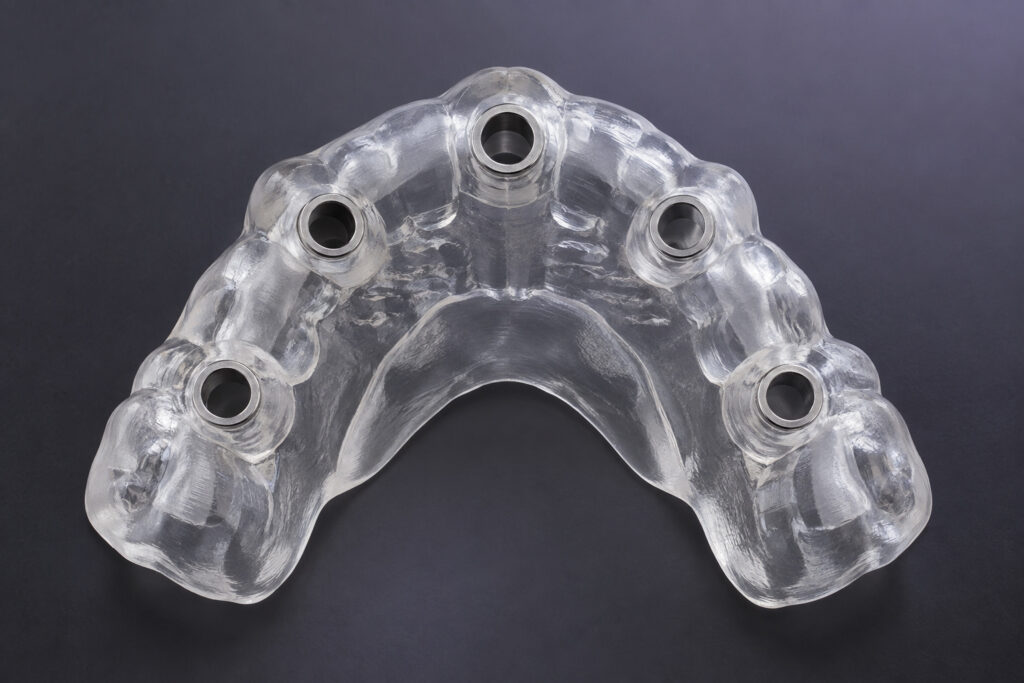
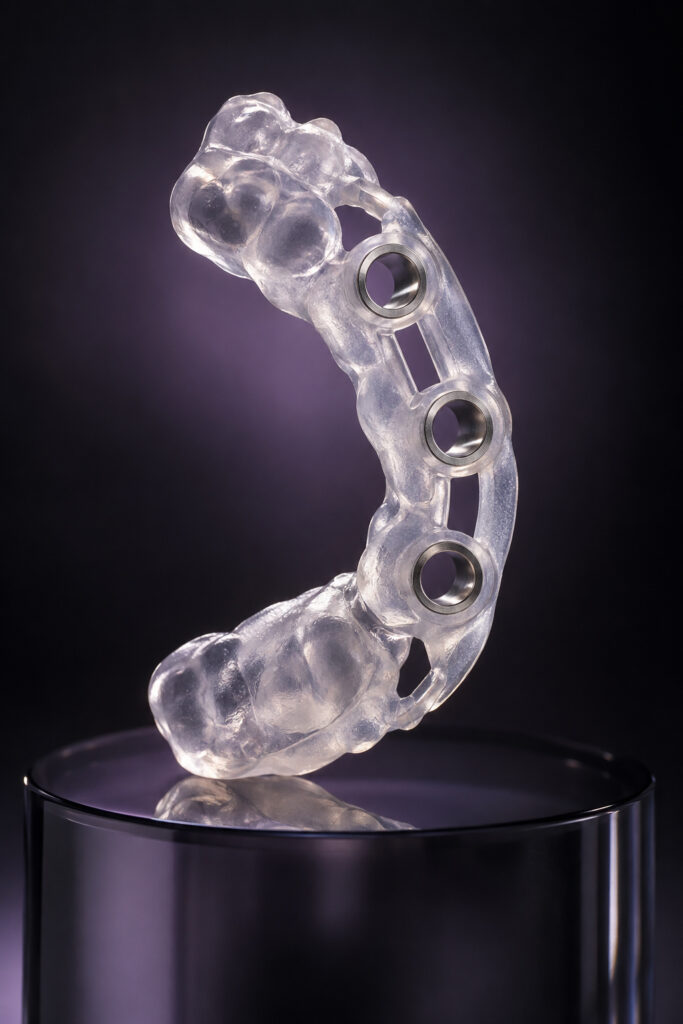
Surgical guide. A personalized guide that combines tomography data with intraoral scanning to plan the position, angle, and depth of implants, helping transfer the plan to the surgical site.
This information is for general educational purposes. It does not replace a dental examination or diagnosis. Diagnosis and treatment plans may change after an examination.
OVERVIEW
From tomography and digital impressions to surgical guide.
In the surgical guide plan, tomography showing the jawbone is aligned with the intraoral scan showing the teeth and gum surfaces.
Implant positions are digitally determined, taking prosthetic goals and anatomical boundaries into account; a custom guide fitting the mouth is then produced. In suitable cases, the guide can support implant placement without making a wide gum incision. This approach does not guarantee that stitches will not be needed; if safety demands arise during surgery, incisions and stitches may be used. Additional imaging, planning, and guide production may affect the cost. If bone quality and implant stability are appropriate, same-day temporary fixed teeth can be planned for fully edentulous patients; permanent teeth are placed after healing.
01
DIGITAL EVALUATION
02
CUSTOM PLANNING
EVALUATION
How is suitability determined?
Treatment selection is made by evaluating clinical examination, necessary imaging, and personal expectations together.
01
Tomography
Bone volume, nerves, sinuses, and other anatomical boundaries are evaluated in 3D.
02
Digital Impression
Surface registration of teeth, gums, and the prosthetic area is captured.
03
Surgical Suitability
Mouth opening, guide support, bone, and soft tissue conditions are examined.
“A surgical guide does not replace the physician’s judgment; it helps safely transfer the digital plan into the patient’s mouth.”
Dr. Ediz Cem Türk
TREATMENT PROCESS
Step-by-step process
01
Data Collection
Tomography, intraoral scanning, and necessary photographs are taken.
02
Virtual Planning
The implant position, angle, depth, and upper tooth alignment are planned together.
03
Guide Fabrication
A custom surgical guide is prepared according to the approved plan and its fit is checked.
04
Application and Follow-up
The guide is used during surgery; required clinical checks and healing follow-ups are performed.
FREQUENTLY ASKED
Detailed answers
It is a custom-made drilling and guidance tool that helps transfer the implant plan to the patient’s mouth.
It can be evaluated for individuals with sufficient imaging data, an oral structure capable of supporting the guide, and suitable bone conditions for planning.
Tomography, intraoral scanning, systemic health, mouth opening, as well as bone and soft tissue conditions are examined together.
Data is matched, implants are virtually planned, the guide is fabricated, checked intraorally, and used in surgery.
It is performed under local anesthesia; the likelihood of pain, swelling, and sensitivity may decrease, but is not completely eliminated.
Imaging, planning, manufacturing, and surgery are distinct stages; total duration is determined based on the case and laboratory workflow.
Insufficient mouth opening, bone deficiency, limited guide support, or inability to achieve safety margins may preclude this method.
Guide mismatch, deviation from planned position, surgical complications, or the need to switch to open surgery during the procedure may occur.
Guide cleaning is managed by the clinical team; post-surgery hygiene, medications, and follow-up recommendations are tailored individually.
Freehand surgery, partially guided surgery, open, or flapless approaches can be evaluated according to clinical necessity.
Further reading on oral hygiene and preventive care (NHS).
EXAMINATION AND PLANNING
Contact information
The suitability of Surgical Guide application for you can only be determined after clinical evaluation.
Last updated: 25 November 2026. Content editor: Dt. Ediz Cem Türk — dtedizcemturk@gmail.com