

TREATMENT DETAILS
Orthodontic
A treatment field aimed at organizing tooth alignment, spacing, and bite relationships using fixed braces or removable clear aligners.
OVERVIEW
Evaluating tooth, bone, and supporting tissue suitability regardless of age.
When healthy teeth and periodontal tissues are present, orthodontic treatment can be evaluated in children, teenagers, and adults; the method is selected based on the case and targeted movements.
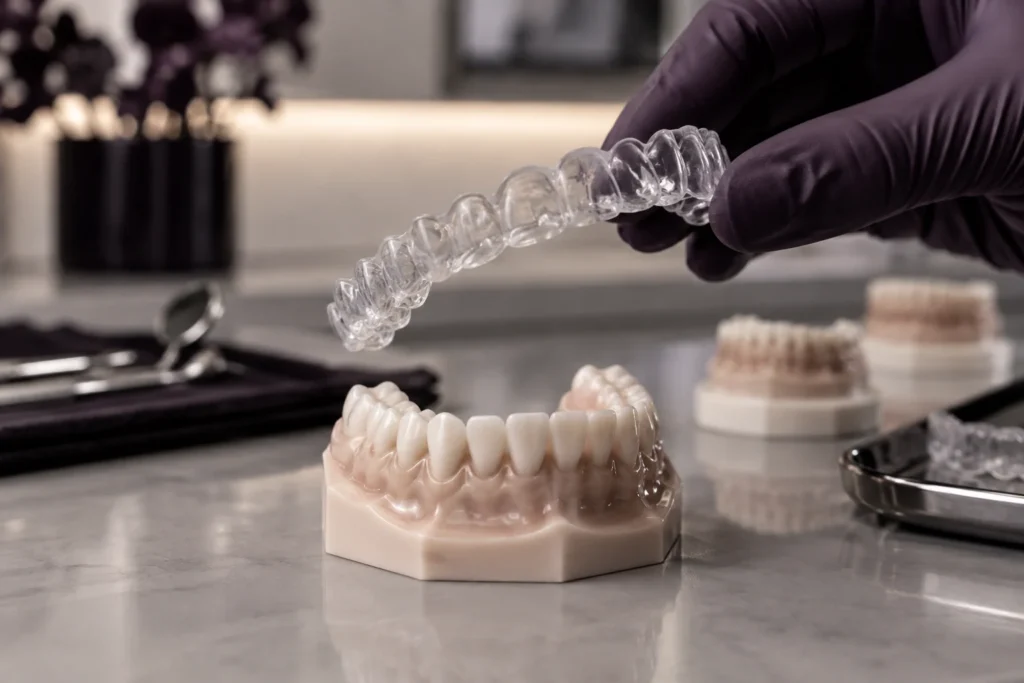
Fixed treatment uses brackets and wires, while clear aligner treatment utilizes removable aligners produced through digital planning. Although clear aligners do not contain wires, tooth-colored attachments may be bonded to the tooth surface and regular compliance is required. The duration varies depending on crowding, jaw relationship, age, biological response, and patient compliance. If a missing tooth space has narrowed due to adjacent teeth tipping, space can be reopened with orthodontics prior to implant placement. Impacted canines can be brought into the arch using appropriate surgical and orthodontic planning.
01
DIGITAL EVALUATION
02
CUSTOM PLANNING
EVALUATION
How is suitability determined?
Treatment selection is made by evaluating clinical examination, necessary imaging, and personal expectations together.
01
Teeth and bite
Crowding, spacing, occlusion, missing teeth, and impacted teeth are evaluated.
02
Bone and gums
Radiographs, roots, bone levels, and periodontal health are examined.
03
Method and compliance
Bracket or aligner options, usage responsibility, and oral care are discussed.
“The orthodontic method is determined not by the appearance of the appliance, but by the required tooth movements and the health of the supporting tissues.”
Dr. Ediz Cem Türk
TREATMENT PROCESS
Step-by-step process
01
Records
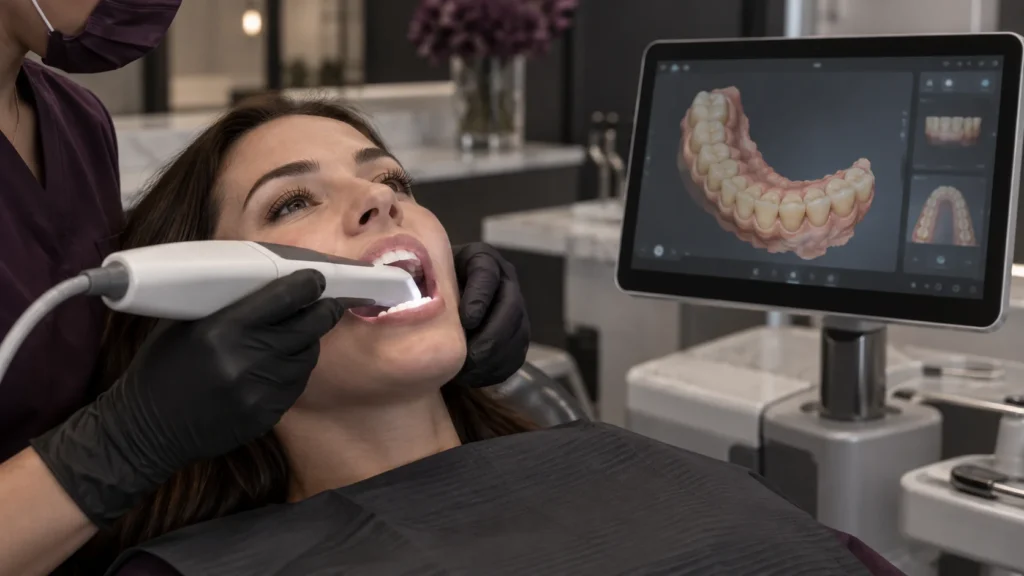
Photographs, intraoral scans, radiographs, and measurements are taken.
02
Treatment plan
Targeted movements, method, estimated duration, and interdisciplinary collaboration if needed are determined.
03
Active treatment
Brackets or aligners apply forces to teeth at controlled intervals.
04
Retention
When teeth reach the target position, retainers are planned to maintain the result.
FREQUENTLY ASKED
Detailed answers
It is the treatment field that arranges tooth position and bite relationships between jaws using controlled forces.
Orthodontic treatment corrects crowding, spacing, and bite issues with controlled tooth movements. Fixed brackets are bonded to teeth and work with wires; clear aligners are removable but must be worn regularly for the planned duration. Age alone is not an obstacle; periodontal health and bone support are crucial in adults. Gaps narrowed by missing teeth can be opened prior to implant placement. Impacted canines can be brought into the mouth via surgical exposure and orthodontic traction if their position and root relationships are suitable. Not every case can be resolved with clear aligners, and retention is required at the end of treatment.
It can be evaluated in children, teenagers, or adults, provided their supporting tissues are healthy and the target movement is found feasible.
Orthodontic treatment corrects crowding, spacing, and bite issues with controlled tooth movements. Fixed brackets are bonded to teeth and work with wires; clear aligners are removable but must be worn regularly for the planned duration. Age alone is not an obstacle; periodontal health and bone support are crucial in adults. Gaps narrowed by missing teeth can be opened prior to implant placement. Impacted canines can be brought into the mouth via surgical exposure and orthodontic traction if their position and root relationships are suitable. Not every case can be resolved with clear aligners, and retention is required at the end of treatment.
Photographs, scans, radiographs, roots, bone, gums, bite, and jaw relationships are examined.
Orthodontic treatment corrects crowding, spacing, and bite issues with controlled tooth movements. Fixed brackets are bonded to teeth and work with wires; clear aligners are removable but must be worn regularly for the planned duration. Age alone is not an obstacle; periodontal health and bone support are crucial in adults. Gaps narrowed by missing teeth can be opened prior to implant placement. Impacted canines can be brought into the mouth via surgical exposure and orthodontic traction if their position and root relationships are suitable. Not every case can be resolved with clear aligners, and retention is required at the end of treatment.
Teeth are gradually moved using bracket-wire systems or sequential clear aligners, accompanied by regular checks.
Orthodontic treatment corrects crowding, spacing, and bite issues with controlled tooth movements. Fixed brackets are bonded to teeth and work with wires; clear aligners are removable but must be worn regularly for the planned duration. Age alone is not an obstacle; periodontal health and bone support are crucial in adults. Gaps narrowed by missing teeth can be opened prior to implant placement. Impacted canines can be brought into the mouth via surgical exposure and orthodontic traction if their position and root relationships are suitable. Not every case can be resolved with clear aligners, and retention is required at the end of treatment.
Pressure and sensitivity may occur in the first few days; sharp wire or aligner edges may irritate soft tissues.
Orthodontic treatment corrects crowding, spacing, and bite issues with controlled tooth movements. Fixed brackets are bonded to teeth and work with wires; clear aligners are removable but must be worn regularly for the planned duration. Age alone is not an obstacle; periodontal health and bone support are crucial in adults. Gaps narrowed by missing teeth can be opened prior to implant placement. Impacted canines can be brought into the mouth via surgical exposure and orthodontic traction if their position and root relationships are suitable. Not every case can be resolved with clear aligners, and retention is required at the end of treatment.
Duration varies depending on crowding, types of movements, age, biological response, and usage compliance.
Orthodontic treatment corrects crowding, spacing, and bite issues with controlled tooth movements. Fixed brackets are bonded to teeth and work with wires; clear aligners are removable but must be worn regularly for the planned duration. Age alone is not an obstacle; periodontal health and bone support are crucial in adults. Gaps narrowed by missing teeth can be opened prior to implant placement. Impacted canines can be brought into the mouth via surgical exposure and orthodontic traction if their position and root relationships are suitable. Not every case can be resolved with clear aligners, and retention is required at the end of treatment.
Active periodontal disease, insufficient bone support, or non-compliance must be managed beforehand.
Orthodontic treatment corrects crowding, spacing, and bite issues with controlled tooth movements. Fixed brackets are bonded to teeth and work with wires; clear aligners are removable but must be worn regularly for the planned duration. Age alone is not an obstacle; periodontal health and bone support are crucial in adults. Gaps narrowed by missing teeth can be opened prior to implant placement. Impacted canines can be brought into the mouth via surgical exposure and orthodontic traction if their position and root relationships are suitable. Not every case can be resolved with clear aligners, and retention is required at the end of treatment.
Root resorption, gum recession, caries, white spot lesions, pain, or failure to achieve planned movements may occur.
Orthodontic treatment corrects crowding, spacing, and bite issues with controlled tooth movements. Fixed brackets are bonded to teeth and work with wires; clear aligners are removable but must be worn regularly for the planned duration. Age alone is not an obstacle; periodontal health and bone support are crucial in adults. Gaps narrowed by missing teeth can be opened prior to implant placement. Impacted canines can be brought into the mouth via surgical exposure and orthodontic traction if their position and root relationships are suitable. Not every case can be resolved with clear aligners, and retention is required at the end of treatment.
Around brackets or aligners should be cleaned regularly; aligner wear duration and check-up appointments must not be skipped.
Orthodontic treatment corrects crowding, spacing, and bite issues with controlled tooth movements. Fixed brackets are bonded to teeth and work with wires; clear aligners are removable but must be worn regularly for the planned duration. Age alone is not an obstacle; periodontal health and bone support are crucial in adults. Gaps narrowed by missing teeth can be opened prior to implant placement. Impacted canines can be brought into the mouth via surgical exposure and orthodontic traction if their position and root relationships are suitable. Not every case can be resolved with clear aligners, and retention is required at the end of treatment.
Brackets, clear aligners, limited prosthetic adjustments, or surgical support in skeletal-based cases can be evaluated.
Orthodontic treatment corrects crowding, spacing, and bite issues with controlled tooth movements. Fixed brackets are bonded to teeth and work with wires; clear aligners are removable but must be worn regularly for the planned duration. Age alone is not an obstacle; periodontal health and bone support are crucial in adults. Gaps narrowed by missing teeth can be opened prior to implant placement. Impacted canines can be brought into the mouth via surgical exposure and orthodontic traction if their position and root relationships are suitable. Not every case can be resolved with clear aligners, and retention is required at the end of treatment.
EXAMINATION AND PLANNING
Let’s evaluate the right option for you together.
The suitability of Orthodontic Treatment for you can only be determined after clinical evaluation.