

TREATMENT DETAILS
Endocrown,
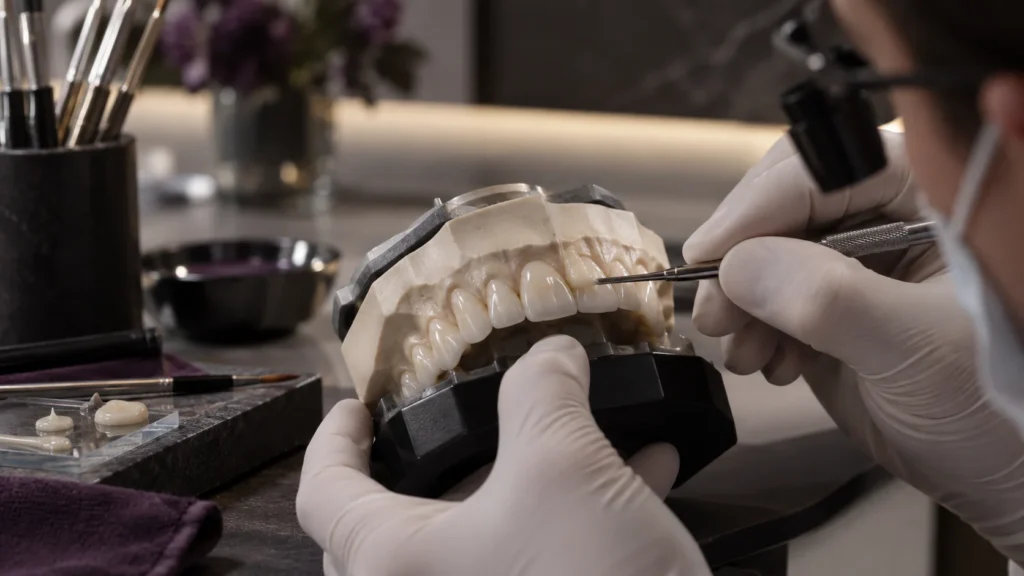
Indirect restorations fabricated out-of-mouth as a single unit using remaining healthy tissue in teeth with material loss, adhesive-bonded to the tooth.
OVERVIEW
Partial restorations preserving remaining tooth structure.
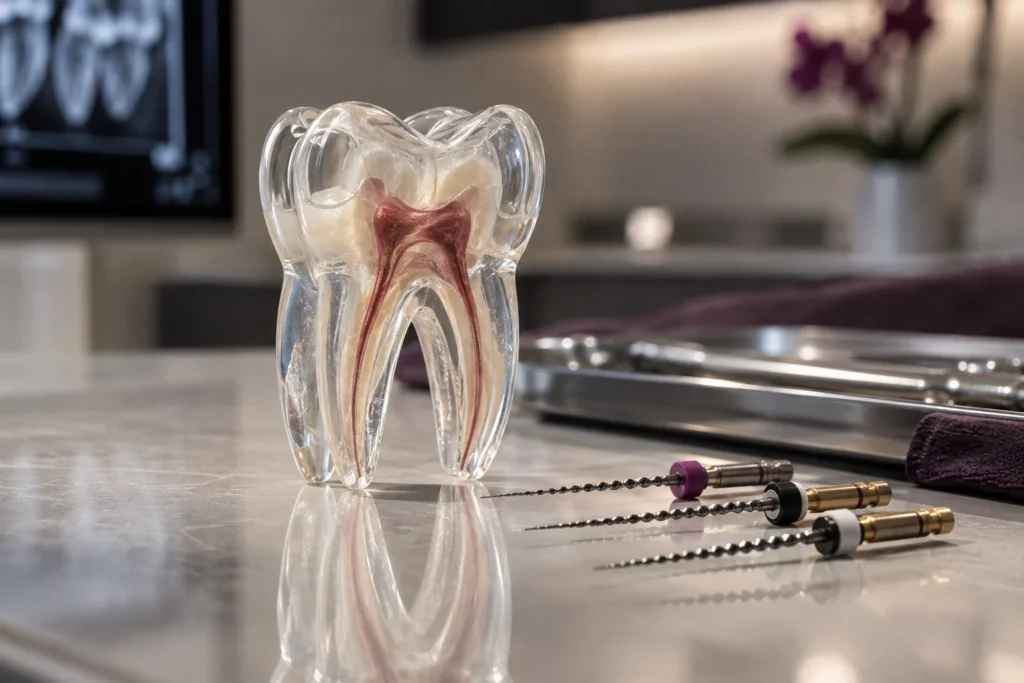
Endocrowns are mostly evaluated for endodontically treated posterior teeth with extensive crown loss, whereas inlays and onlays are considered for suitable vital or endodontically treated teeth.
An inlay is prepared between the cusps of the tooth, while an onlay covers one or more cusps. An endocrown derives retention from the pulp chamber to restore an endodontically treated tooth with extensive material loss as a single piece. Compared to full crowns, these methods can reduce circumferential tooth reduction in certain cases; however, they do not eliminate the need for crowns in every tooth. The restoration, prepared using digital or conventional impressions, fits into the missing area like a puzzle piece and is adhesive-bonded. Durability depends on the remaining tissue, material, cementation protocol, and occlusion.
01
DIGITAL EVALUATION
02
CUSTOM PLANNING
EVALUATION
How is suitability determined?
Treatment selection is made by evaluating clinical examination, necessary imaging, and personal expectations together.
01
Remaining tooth tissue
Wall thickness, cracks, caries, and cusp support are evaluated.
02
Pulp and canal status
Tooth vitality or the quality of root canal treatment is checked.
03
Occlusion
Masticatory forces, bruxism, and opposing tooth contacts are examined.
“In indirect partial restorations, the method is selected based on the amount of lost tissue and the load the remaining tooth can withstand.”
Dr. Ediz Cem Türk
TREATMENT PROCESS
Step-by-step process
01
Diagnosis and design
The need for an inlay, onlay, endocrown, or full crown is determined.
02
Preparation and impression
Caries and weakened tissue are removed; digital or conventional impressions are taken.
03
Fabrication and try-in
The single-piece restoration is fabricated in the laboratory; fit and occlusion are checked.
04
Adhesive bonding
Surfaces are prepared, the restoration is bonded to the tooth, and final checks are completed.
FREQUENTLY ASKED
Detailed answers
These are conservative restorative approaches that replace tooth structure loss with a single-piece laboratory restoration.
Inlays, onlays, and endocrowns are indirect restorations fabricated out-of-mouth as a single piece. An inlay replaces material loss between cusps, whereas an onlay also covers weakened cusps. An endocrown mostly derives retention from the pulp chamber in an endodontically treated posterior tooth. With proper design, less tooth tissue may be removed compared to full circumferential crowns; however, it cannot be claimed that this applies to every case or that they will never break. The longevity of the restoration is influenced by remaining tooth structure, cracks, material, adhesive protocol, occlusion, and oral care. While inlays/onlays can be performed on vital teeth, they can also be used on endodontically treated teeth depending on clinical necessity.
They can be evaluated for teeth with large fillings, fractures, or cusp weakness, provided the remaining structure is suitable for adhesive bonding.
Inlays, onlays, and endocrowns are indirect restorations fabricated out-of-mouth as a single piece. An inlay replaces material loss between cusps, whereas an onlay also covers weakened cusps. An endocrown mostly derives retention from the pulp chamber in an endodontically treated posterior tooth. With proper design, less tooth tissue may be removed compared to full circumferential crowns; however, it cannot be claimed that this applies to every case or that they will never break. The longevity of the restoration is influenced by remaining tooth structure, cracks, material, adhesive protocol, occlusion, and oral care. While inlays/onlays can be performed on vital teeth, they can also be used on endodontically treated teeth depending on clinical necessity.
Vitality, root canal treatment quality, cracks, wall thickness, caries, gum health, and occlusion are examined.
Inlays, onlays, and endocrowns are indirect restorations fabricated out-of-mouth as a single piece. An inlay replaces material loss between cusps, whereas an onlay also covers weakened cusps. An endocrown mostly derives retention from the pulp chamber in an endodontically treated posterior tooth. With proper design, less tooth tissue may be removed compared to full circumferential crowns; however, it cannot be claimed that this applies to every case or that they will never break. The longevity of the restoration is influenced by remaining tooth structure, cracks, material, adhesive protocol, occlusion, and oral care. While inlays/onlays can be performed on vital teeth, they can also be used on endodontically treated teeth depending on clinical necessity.
The tooth is prepared, impressions are taken, the restoration is fabricated, tried in, and bonded using an appropriate adhesive system.
Inlays, onlays, and endocrowns are indirect restorations fabricated out-of-mouth as a single piece. An inlay replaces material loss between cusps, whereas an onlay also covers weakened cusps. An endocrown mostly derives retention from the pulp chamber in an endodontically treated posterior tooth. With proper design, less tooth tissue may be removed compared to full circumferential crowns; however, it cannot be claimed that this applies to every case or that they will never break. The longevity of the restoration is influenced by remaining tooth structure, cracks, material, adhesive protocol, occlusion, and oral care. While inlays/onlays can be performed on vital teeth, they can also be used on endodontically treated teeth depending on clinical necessity.
Anesthesia may be used during preparation; temporary contact sensitivity or hot-cold sensitivity may occur after bonding.
Inlays, onlays, and endocrowns are indirect restorations fabricated out-of-mouth as a single piece. An inlay replaces material loss between cusps, whereas an onlay also covers weakened cusps. An endocrown mostly derives retention from the pulp chamber in an endodontically treated posterior tooth. With proper design, less tooth tissue may be removed compared to full circumferential crowns; however, it cannot be claimed that this applies to every case or that they will never break. The longevity of the restoration is influenced by remaining tooth structure, cracks, material, adhesive protocol, occlusion, and oral care. While inlays/onlays can be performed on vital teeth, they can also be used on endodontically treated teeth depending on clinical necessity.
Clinical and laboratory stages usually require multiple appointments; digital fabrication may alter the schedule.
Inlays, onlays, and endocrowns are indirect restorations fabricated out-of-mouth as a single piece. An inlay replaces material loss between cusps, whereas an onlay also covers weakened cusps. An endocrown mostly derives retention from the pulp chamber in an endodontically treated posterior tooth. With proper design, less tooth tissue may be removed compared to full circumferential crowns; however, it cannot be claimed that this applies to every case or that they will never break. The longevity of the restoration is influenced by remaining tooth structure, cracks, material, adhesive protocol, occlusion, and oral care. While inlays/onlays can be performed on vital teeth, they can also be used on endodontically treated teeth depending on clinical necessity.
Subgingival caries, root fracture, insufficient tissue, or uncontrolled bruxism may limit this method.
Inlays, onlays, and endocrowns are indirect restorations fabricated out-of-mouth as a single piece. An inlay replaces material loss between cusps, whereas an onlay also covers weakened cusps. An endocrown mostly derives retention from the pulp chamber in an endodontically treated posterior tooth. With proper design, less tooth tissue may be removed compared to full circumferential crowns; however, it cannot be claimed that this applies to every case or that they will never break. The longevity of the restoration is influenced by remaining tooth structure, cracks, material, adhesive protocol, occlusion, and oral care. While inlays/onlays can be performed on vital teeth, they can also be used on endodontically treated teeth depending on clinical necessity.
Ceramic fracture, debonding, marginal leakage, recurrent caries, or fracture of the remaining tooth structure may occur.
Inlays, onlays, and endocrowns are indirect restorations fabricated out-of-mouth as a single piece. An inlay replaces material loss between cusps, whereas an onlay also covers weakened cusps. An endocrown mostly derives retention from the pulp chamber in an endodontically treated posterior tooth. With proper design, less tooth tissue may be removed compared to full circumferential crowns; however, it cannot be claimed that this applies to every case or that they will never break. The longevity of the restoration is influenced by remaining tooth structure, cracks, material, adhesive protocol, occlusion, and oral care. While inlays/onlays can be performed on vital teeth, they can also be used on endodontically treated teeth depending on clinical necessity.
Avoiding hard objects, interdental cleaning, bruxism control, and regular dental examinations are important.
Inlays, onlays, and endocrowns are indirect restorations fabricated out-of-mouth as a single piece. An inlay replaces material loss between cusps, whereas an onlay also covers weakened cusps. An endocrown mostly derives retention from the pulp chamber in an endodontically treated posterior tooth. With proper design, less tooth tissue may be removed compared to full circumferential crowns; however, it cannot be claimed that this applies to every case or that they will never break. The longevity of the restoration is influenced by remaining tooth structure, cracks, material, adhesive protocol, occlusion, and oral care. While inlays/onlays can be performed on vital teeth, they can also be used on endodontically treated teeth depending on clinical necessity.
Direct fillings, post-and-core, full crowns, or post-extraction options in cases where the tooth cannot be preserved can be evaluated.
Inlays, onlays, and endocrowns are indirect restorations fabricated out-of-mouth as a single piece. An inlay replaces material loss between cusps, whereas an onlay also covers weakened cusps. An endocrown mostly derives retention from the pulp chamber in an endodontically treated posterior tooth. With proper design, less tooth tissue may be removed compared to full circumferential crowns; however, it cannot be claimed that this applies to every case or that they will never break. The longevity of the restoration is influenced by remaining tooth structure, cracks, material, adhesive protocol, occlusion, and oral care. While inlays/onlays can be performed on vital teeth, they can also be used on endodontically treated teeth depending on clinical necessity.
EXAMINATION AND PLANNING
Let’s evaluate the right option for you together.
The suitability of Endocrown, Onlay, or Inlay application for you can only be determined after clinical evaluation.