

TREATMENT DETAILS
Flapless
A minimally invasive surgical approach aiming to place an implant through a small entry site without reflecting a wide flap under suitable bone and gum conditions.
OVERVIEW
Accurate case selection for limited tissue intervention.
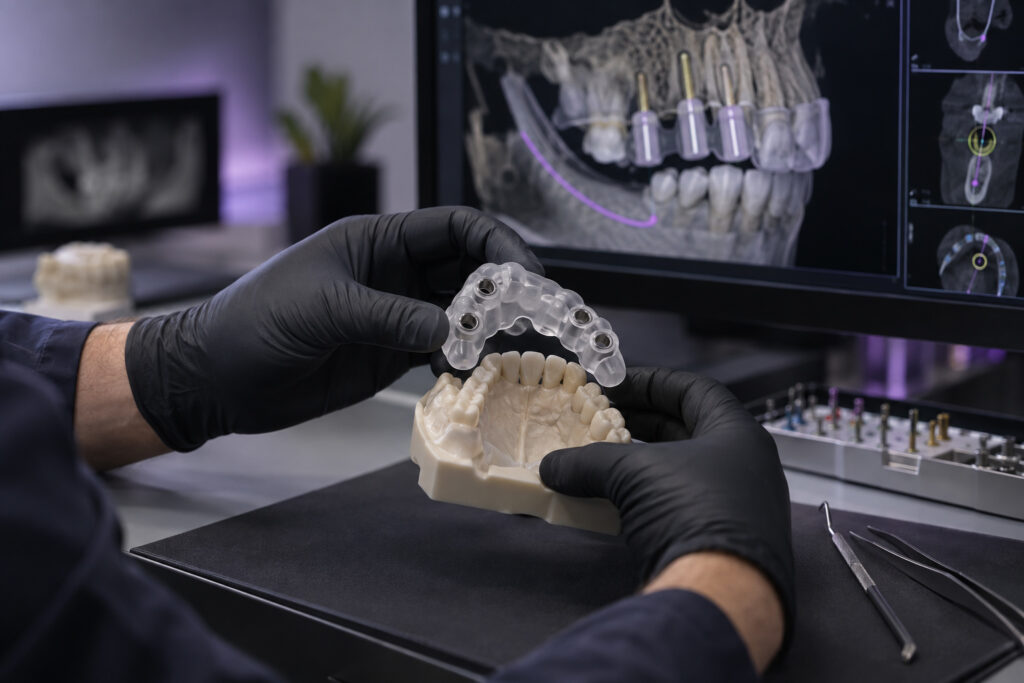
In the flapless implant approach, the goal is to reach the implant site without reflecting the gum tissue with a wide incision; planning can be performed via freehand or guided surgical support.
Not reflecting a large flap can reduce post-operative pain and swelling in suitable cases; however, it does not eliminate the risk of bruising, pain, swelling, or the need for sutures. Bone volume and morphology, keratinized gingiva, infection status, implant location, and mouth opening must be evaluated. If visibility or safety is inadequate, open surgery may be performed. The method requires custom planning, proper equipment, and clinical experience; however, it cannot be presented as a claim of clinical superiority over others.
01
DIGITAL EVALUATION
02
PERSONALIZED PLANNING
EVALUATION
How is eligibility determined?
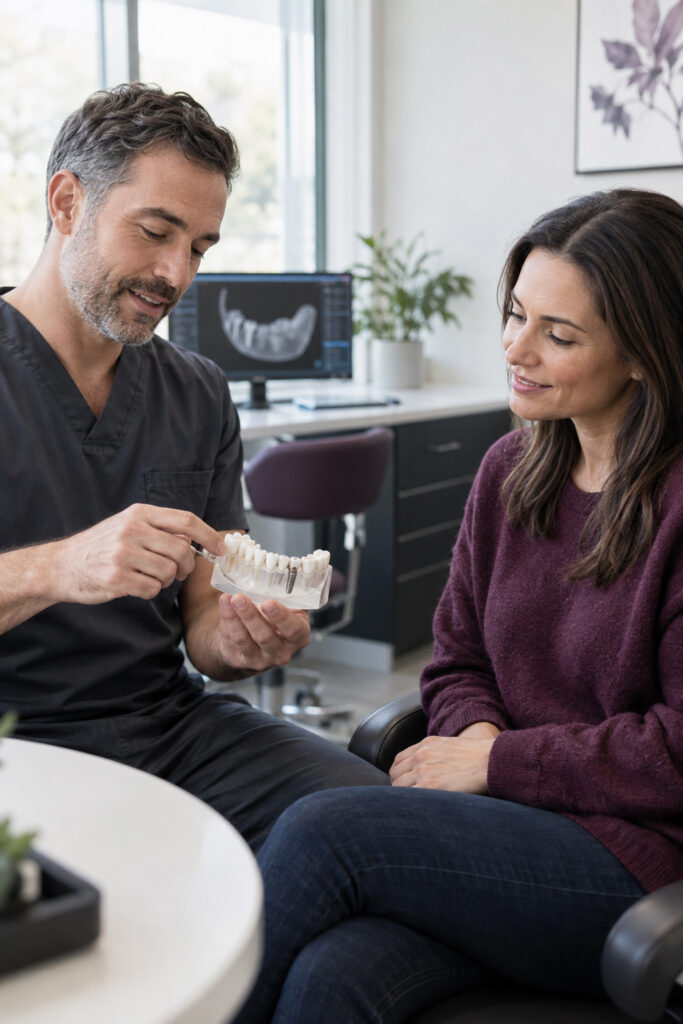
Treatment selection is made by evaluating clinical examination, necessary imaging, and personal expectations together.
01
Bone structure
Bone thickness, height, and anatomical adjacencies are examined via tomography.
02
Gum conditions
Tissue thickness, amount of keratinized gingiva, and infection status are evaluated.
03
Surgical access
Mouth opening, implant position, and the use of surgical guides if needed are planned.
“A smaller entry area can be a safe option if bone and soft tissue conditions are suitable.”
Dr. Ediz Cem Türk
TREATMENT PROCESS
Step-by-step process
01
Examination and imaging
General health, oral tissues, and bone are evaluated via tomography.
02
Planning
Implant size, position, entry site, and potential surgical guide requirements are determined.
03
Placement
The implant bed is prepared through a small entry site under local anesthesia.
04
Follow-up
Implant stability, tissues, and healing are monitored; the approach is changed if necessary.
FREQUENTLY ASKED QUESTIONS
Detailed answers
It is a surgical approach aimed at placing implants through a small entry site without reflecting a wide flap.
Flapless implant aims to place an implant without raising a large gum flap. In suitable cases, limited tissue intervention can reduce post-operative pain, swelling, and bruising. However, surgical risks are not entirely eliminated, and incisions or sutures may be required during the procedure due to visibility, bone structure, or safety reasons. Bone volume, gum thickness, infection, anatomical boundaries, and mouth opening are evaluated using tomography for this method. If bone or gum support is inadequate, open surgery, bone augmentation, or alternative treatment options may be planned.
It can be evaluated in individuals with suitable bone and gum structure, controlled active infection, and sufficient safety margins in the planned area.
Flapless implant aims to place an implant without raising a large gum flap. In suitable cases, limited tissue intervention can reduce post-operative pain, swelling, and bruising. However, surgical risks are not entirely eliminated, and incisions or sutures may be required during the procedure due to visibility, bone structure, or safety reasons. Bone volume, gum thickness, infection, anatomical boundaries, and mouth opening are evaluated using tomography for this method. If bone or gum support is inadequate, open surgery, bone augmentation, or alternative treatment options may be planned.
Tomography, clinical examination, systemic health, gum thickness, bone volume, and anatomical adjacencies are examined.
Flapless implant aims to place an implant without raising a large gum flap. In suitable cases, limited tissue intervention can reduce post-operative pain, swelling, and bruising. However, surgical risks are not entirely eliminated, and incisions or sutures may be required during the procedure due to visibility, bone structure, or safety reasons. Bone volume, gum thickness, infection, anatomical boundaries, and mouth opening are evaluated using tomography for this method. If bone or gum support is inadequate, open surgery, bone augmentation, or alternative treatment options may be planned.
A small entry point is created at the planned site, the implant bed is prepared, and the implant is placed; the method is altered if safety demands it.
Flapless implant aims to place an implant without raising a large gum flap. In suitable cases, limited tissue intervention can reduce post-operative pain, swelling, and bruising. However, surgical risks are not entirely eliminated, and incisions or sutures may be required during the procedure due to visibility, bone structure, or safety reasons. Bone volume, gum thickness, infection, anatomical boundaries, and mouth opening are evaluated using tomography for this method. If bone or gum support is inadequate, open surgery, bone augmentation, or alternative treatment options may be planned.
Local anesthesia is used; post-operative pain and swelling may occur, though tissue intervention is limited in selected cases.
Flapless implant aims to place an implant without raising a large gum flap. In suitable cases, limited tissue intervention can reduce post-operative pain, swelling, and bruising. However, surgical risks are not entirely eliminated, and incisions or sutures may be required during the procedure due to visibility, bone structure, or safety reasons. Bone volume, gum thickness, infection, anatomical boundaries, and mouth opening are evaluated using tomography for this method. If bone or gum support is inadequate, open surgery, bone augmentation, or alternative treatment options may be planned.
Surgical duration varies depending on the number of implants and guide usage, while healing time depends on bone and general health conditions.
Flapless implant aims to place an implant without raising a large gum flap. In suitable cases, limited tissue intervention can reduce post-operative pain, swelling, and bruising. However, surgical risks are not entirely eliminated, and incisions or sutures may be required during the procedure due to visibility, bone structure, or safety reasons. Bone volume, gum thickness, infection, anatomical boundaries, and mouth opening are evaluated using tomography for this method. If bone or gum support is inadequate, open surgery, bone augmentation, or alternative treatment options may be planned.
If bone volume, gum structure, or visibility is insufficient, the flapless approach may not be suitable.
Flapless implant aims to place an implant without raising a large gum flap. In suitable cases, limited tissue intervention can reduce post-operative pain, swelling, and bruising. However, surgical risks are not entirely eliminated, and incisions or sutures may be required during the procedure due to visibility, bone structure, or safety reasons. Bone volume, gum thickness, infection, anatomical boundaries, and mouth opening are evaluated using tomography for this method. If bone or gum support is inadequate, open surgery, bone augmentation, or alternative treatment options may be planned.
Swelling, pain, infection, implant stability issues, and the need to switch to open surgery are among the potential risks.
Flapless implant aims to place an implant without raising a large gum flap. In suitable cases, limited tissue intervention can reduce post-operative pain, swelling, and bruising. However, surgical risks are not entirely eliminated, and incisions or sutures may be required during the procedure due to visibility, bone structure, or safety reasons. Bone volume, gum thickness, infection, anatomical boundaries, and mouth opening are evaluated using tomography for this method. If bone or gum support is inadequate, open surgery, bone augmentation, or alternative treatment options may be planned.
The surgical area should be cleaned as instructed by the dentist; medication, nutrition, and follow-up recommendations must be followed.
Flapless implant aims to place an implant without raising a large gum flap. In suitable cases, limited tissue intervention can reduce post-operative pain, swelling, and bruising. However, surgical risks are not entirely eliminated, and incisions or sutures may be required during the procedure due to visibility, bone structure, or safety reasons. Bone volume, gum thickness, infection, anatomical boundaries, and mouth opening are evaluated using tomography for this method. If bone or gum support is inadequate, open surgery, bone augmentation, or alternative treatment options may be planned.
Options such as open implant surgery, guided surgery, dental bridges, or removable dentures are compared on a case-by-case basis.
Flapless implant aims to place an implant without raising a large gum flap. In suitable cases, limited tissue intervention can reduce post-operative pain, swelling, and bruising. However, surgical risks are not entirely eliminated, and incisions or sutures may be required during the procedure due to visibility, bone structure, or safety reasons. Bone volume, gum thickness, infection, anatomical boundaries, and mouth opening are evaluated using tomography for this method. If bone or gum support is inadequate, open surgery, bone augmentation, or alternative treatment options may be planned.
EXAMINATION AND PLANNING
Let us evaluate the suitable option for you together.
The suitability of Flapless Implant treatment for you can only be determined after a clinical evaluation.