

TREATMENT DETAILS
Root canal
A treatment aimed at preserving the natural tooth by removing damaged pulp tissue caused by decay, cracks, or trauma, followed by cleaning and filling the root canals.
OVERVIEW
Controlled cleaning from the pulp chamber to the root apex.
Root canal treatment may be required when decay reaches the pulp chamber or when the neurovascular tissue of the tooth is irreversibly damaged.
In current practice, rotary endodontic instruments and electronic apex locators assist in cleaning the canal and determining the working length; radiographic checks are still necessary. Pain during the procedure is controlled with local anesthesia, but 100% painlessness cannot be guaranteed. If persistent infection, untreated canals, or leakage exist in a previously treated tooth, retreatment can be performed to remove old filling material and re-clean the canals. Not every tooth with a periapical lesion is extracted; preservability is evaluated after examination and imaging. Intracoronal bleaching can be planned under suitable conditions for darkened endodontically treated teeth.
01
DIGITAL EVALUATION
02
CUSTOM PLANNING
EVALUATION
How is suitability determined?
Treatment selection is made by evaluating clinical examination, necessary imaging, and personal expectations together.
01
Pulp diagnosis
Pain history, vitality tests, percussion, and clinical findings are evaluated.
02
Root and bone
Canal anatomy, root apex, and surrounding bone are examined using radiographs.
03
Restoration plan
Remaining tooth structure, cracks, and post-treatment coronal restoration requirements are determined.
“The goal in root canal treatment is not merely to relieve pain, but to eliminate the source of infection and keep the tooth functional.”
Dr. Ediz Cem Türk
TREATMENT PROCESS
Step-by-step process
01
Diagnosis and anesthesia
Tooth preservability is determined and local anesthesia is administered.
02
Canal cleaning
Canals are cleaned and shaped using rotary instruments, irrigation solutions, and length measurement support.
03
Obturation
Dried canals are filled with appropriate materials and the access cavity is sealed.
04
Coronal restoration
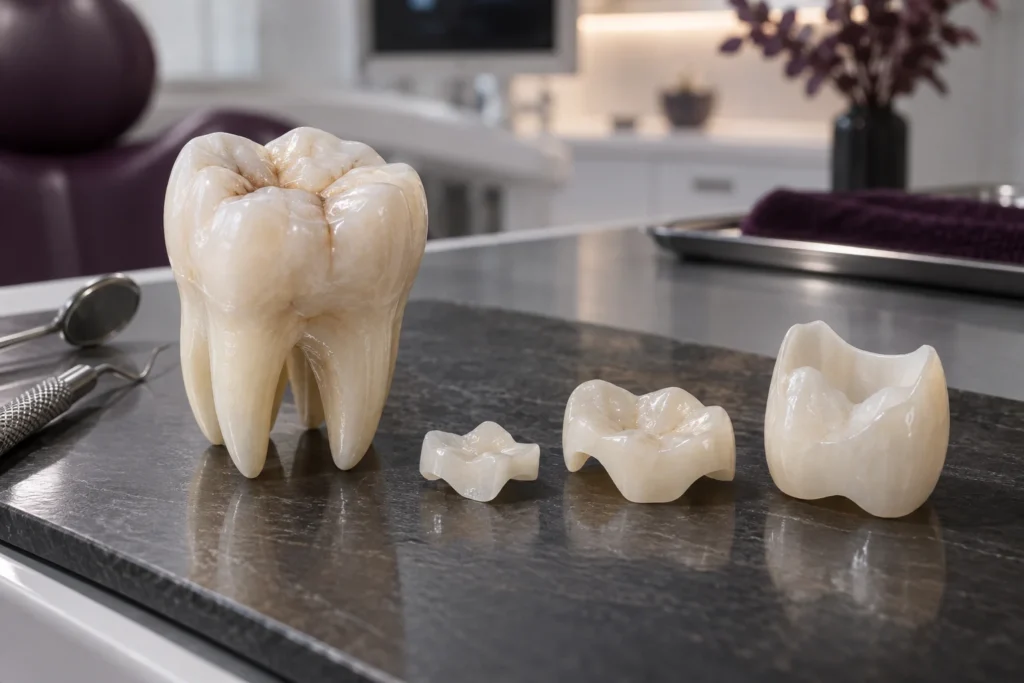
A filling, onlay, endocrown, or crown is planned according to the remaining tooth structure.
FREQUENTLY ASKED
Detailed answers
It is the process of removing damaged pulp tissue inside the tooth, followed by cleaning and filling the root canals.
Root canal treatment is performed when pulp tissue becomes irreversibly inflamed or loses its vitality. Endodontic motors and electronic apex locators assist in shaping the canal and determining the working length; these devices do not replace clinical judgment or radiographs. Pain control is provided with local anesthesia. If untreated canals, leakage, or new caries exist from a previous treatment, retreatment may be evaluated. The decision to extract a tooth with a periapical lesion is made after inspecting cracks, bone support, and retreatment possibilities. Intracoronal bleaching for darkened endodontically treated teeth is performed only after verifying proper sealing and diagnosis.
It is evaluated for preservable teeth with deep caries, trauma, cracks, persistent sensitivity, or root apex infections.
Root canal treatment is performed when pulp tissue becomes irreversibly inflamed or loses its vitality. Endodontic motors and electronic apex locators assist in shaping the canal and determining the working length; these devices do not replace clinical judgment or radiographs. Pain control is provided with local anesthesia. If untreated canals, leakage, or new caries exist from a previous treatment, retreatment may be evaluated. The decision to extract a tooth with a periapical lesion is made after inspecting cracks, bone support, and retreatment possibilities. Intracoronal bleaching for darkened endodontically treated teeth is performed only after verifying proper sealing and diagnosis.
Vitality tests, pain history, radiographs, cracks, and remaining tooth structure are examined together.
Root canal treatment is performed when pulp tissue becomes irreversibly inflamed or loses its vitality. Endodontic motors and electronic apex locators assist in shaping the canal and determining the working length; these devices do not replace clinical judgment or radiographs. Pain control is provided with local anesthesia. If untreated canals, leakage, or new caries exist from a previous treatment, retreatment may be evaluated. The decision to extract a tooth with a periapical lesion is made after inspecting cracks, bone support, and retreatment possibilities. Intracoronal bleaching for darkened endodontically treated teeth is performed only after verifying proper sealing and diagnosis.
Anesthesia, isolation, canal length determination, mechanical cleaning, irrigation, filling, and coronal restoration stages are followed.
Root canal treatment is performed when pulp tissue becomes irreversibly inflamed or loses its vitality. Endodontic motors and electronic apex locators assist in shaping the canal and determining the working length; these devices do not replace clinical judgment or radiographs. Pain control is provided with local anesthesia. If untreated canals, leakage, or new caries exist from a previous treatment, retreatment may be evaluated. The decision to extract a tooth with a periapical lesion is made after inspecting cracks, bone support, and retreatment possibilities. Intracoronal bleaching for darkened endodontically treated teeth is performed only after verifying proper sealing and diagnosis.
Local anesthesia controls procedural pain; chewing sensitivity may occur for a few days following treatment.
Root canal treatment is performed when pulp tissue becomes irreversibly inflamed or loses its vitality. Endodontic motors and electronic apex locators assist in shaping the canal and determining the working length; these devices do not replace clinical judgment or radiographs. Pain control is provided with local anesthesia. If untreated canals, leakage, or new caries exist from a previous treatment, retreatment may be evaluated. The decision to extract a tooth with a periapical lesion is made after inspecting cracks, bone support, and retreatment possibilities. Intracoronal bleaching for darkened endodontically treated teeth is performed only after verifying proper sealing and diagnosis.
Single or multiple sessions may be planned based on the number of canals, infection status, and retreatment needs.
Root canal treatment is performed when pulp tissue becomes irreversibly inflamed or loses its vitality. Endodontic motors and electronic apex locators assist in shaping the canal and determining the working length; these devices do not replace clinical judgment or radiographs. Pain control is provided with local anesthesia. If untreated canals, leakage, or new caries exist from a previous treatment, retreatment may be evaluated. The decision to extract a tooth with a periapical lesion is made after inspecting cracks, bone support, and retreatment possibilities. Intracoronal bleaching for darkened endodontically treated teeth is performed only after verifying proper sealing and diagnosis.
If vertical root fracture, insufficient tooth structure, or uncontrollable periodontal issues exist, the tooth may not be preservable.
Root canal treatment is performed when pulp tissue becomes irreversibly inflamed or loses its vitality. Endodontic motors and electronic apex locators assist in shaping the canal and determining the working length; these devices do not replace clinical judgment or radiographs. Pain control is provided with local anesthesia. If untreated canals, leakage, or new caries exist from a previous treatment, retreatment may be evaluated. The decision to extract a tooth with a periapical lesion is made after inspecting cracks, bone support, and retreatment possibilities. Intracoronal bleaching for darkened endodontically treated teeth is performed only after verifying proper sealing and diagnosis.
Temporary sensitivity, instrument fracture, undiscovered canals, persistent infection, or restoration fracture may occur.
Root canal treatment is performed when pulp tissue becomes irreversibly inflamed or loses its vitality. Endodontic motors and electronic apex locators assist in shaping the canal and determining the working length; these devices do not replace clinical judgment or radiographs. Pain control is provided with local anesthesia. If untreated canals, leakage, or new caries exist from a previous treatment, retreatment may be evaluated. The decision to extract a tooth with a periapical lesion is made after inspecting cracks, bone support, and retreatment possibilities. Intracoronal bleaching for darkened endodontically treated teeth is performed only after verifying proper sealing and diagnosis.
The temporary filling should be protected, hard chewing avoided, and the permanent coronal restoration completed at the specified time.
Root canal treatment is performed when pulp tissue becomes irreversibly inflamed or loses its vitality. Endodontic motors and electronic apex locators assist in shaping the canal and determining the working length; these devices do not replace clinical judgment or radiographs. Pain control is provided with local anesthesia. If untreated canals, leakage, or new caries exist from a previous treatment, retreatment may be evaluated. The decision to extract a tooth with a periapical lesion is made after inspecting cracks, bone support, and retreatment possibilities. Intracoronal bleaching for darkened endodontically treated teeth is performed only after verifying proper sealing and diagnosis.
Retreatment, periapical surgery, or extraction and missing tooth replacements if the tooth cannot be preserved can be evaluated.
Root canal treatment is performed when pulp tissue becomes irreversibly inflamed or loses its vitality. Endodontic motors and electronic apex locators assist in shaping the canal and determining the working length; these devices do not replace clinical judgment or radiographs. Pain control is provided with local anesthesia. If untreated canals, leakage, or new caries exist from a previous treatment, retreatment may be evaluated. The decision to extract a tooth with a periapical lesion is made after inspecting cracks, bone support, and retreatment possibilities. Intracoronal bleaching for darkened endodontically treated teeth is performed only after verifying proper sealing and diagnosis.
EXAMINATION AND PLANNING
Let’s evaluate the right option for you together.
The suitability of Endodontics (Root Canal Treatment) for you can only be determined after clinical evaluation.