

TREATMENT DETAILS
Aesthetic
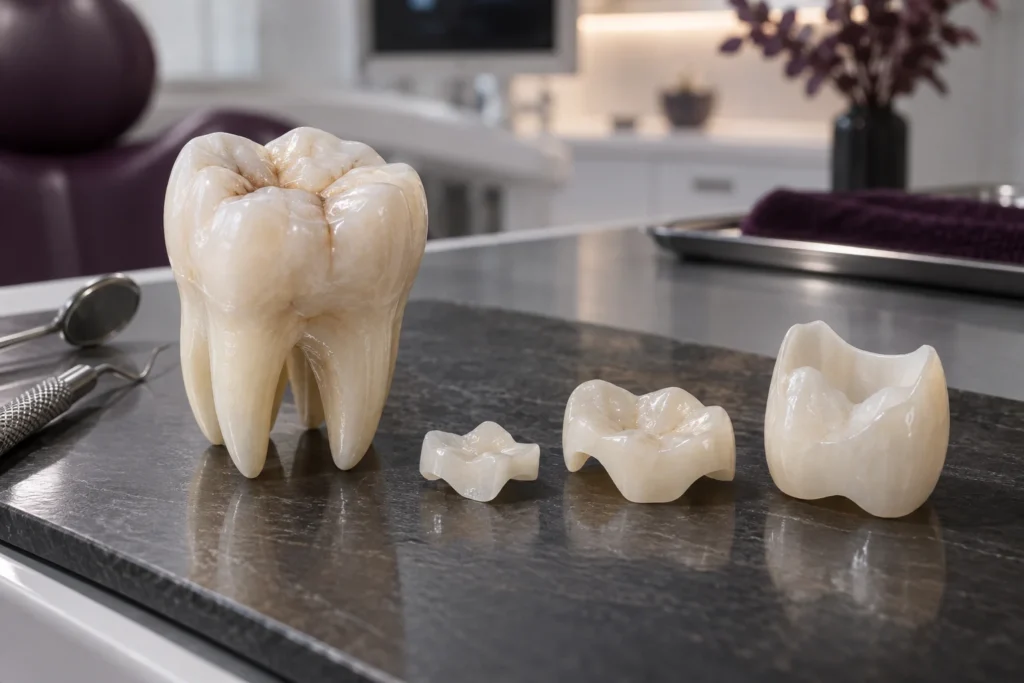
Restoring lost tissue in anterior and posterior teeth due to decay, fracture, wear, or old fillings using composite materials and techniques appropriate for the region.
OVERVIEW
Selecting material, color, and layering according to the tooth region.
While shade, translucency, and surface texture are created using layering techniques in anterior aesthetic fillings, chewing forces and contact form take priority in posterior teeth.
Old fillings that are discolored, have distinct margins, or are fractured can be renewed after evaluating the condition of the tooth and filling. Anterior composites are selected to mimic natural tooth appearance through layers of varying shades and translucencies, whereas posterior composites are chosen to withstand chewing loads. Bonding is the adjustment of minor shape irregularities, gaps, or fractures using composite with minimal preparation. Smoking, colored beverages, surface roughness, and oral hygiene can affect staining over time; regular polishing can reduce certain surface stains.
01
DIGITAL EVALUATION
02
CUSTOM PLANNING
EVALUATION
How is suitability determined?
Treatment selection is made by evaluating clinical examination, necessary imaging, and personal expectations together.
01
Tooth and old filling
Caries, cracks, discoloration, leakage, and remaining healthy tissue are examined.
02
Color and shape
Color, translucency, surface texture, and proportions of neighboring teeth are evaluated.
03
Occlusion
Anterior and posterior tooth contacts along with signs of bruxism are checked.
“In aesthetic fillings, contact, occlusion, and cleanability are as much a part of the restoration as appearance.”
Dr. Ediz Cem Türk
TREATMENT PROCESS
Step-by-step process
01
Color and planning
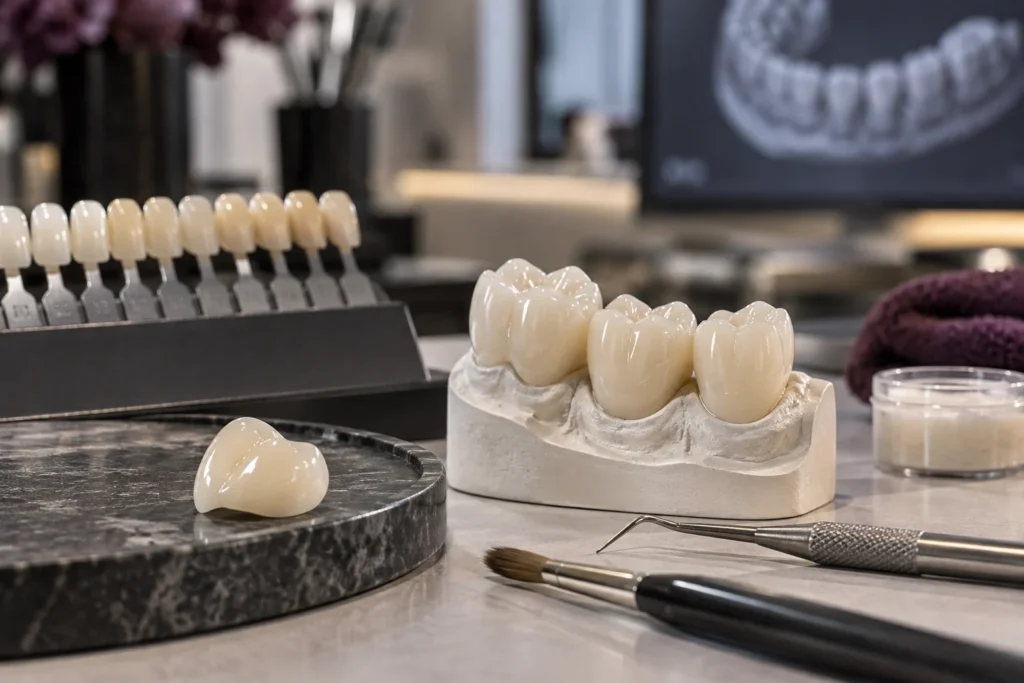
Shade layers and the targeted shape are determined before the tooth dries.
02
Isolation and preparation
Caries or defective filling material is removed; the tooth surface is prepared for bonding.
03
Layering
Composite is placed in layers appropriate for the area and light-cured.
04
Shaping and polishing
Occlusion, contacts, margins, and surface gloss are checked.
FREQUENTLY ASKED
Detailed answers
It is a direct restoration method that replaces lost tissue with tooth-colored composites, restoring form and function.
Aesthetic filling is the restoration of a tooth’s color, form, and function using composite resin. In anterior teeth, enamel and dentin appearance are mimicked using layers of varying opacity and shade; in posterior teeth, chewing forces, contact points, and wear resistance are taken into consideration. Bonding can be applied with minimal preparation in cases of small gaps, fractures, or shape issues, but it does not share the same material or laboratory process as porcelain veneers. Composites may wear, fracture, or develop surface staining over time. Smoking, tea/coffee consumption, oral hygiene, and polishing quality affect color stability. Not every existing filling is replaced solely due to appearance; leakage, caries, and function are evaluated.
It can be evaluated for teeth with small-to-moderate fractures, caries, gaps, discolored old fillings, or limited shape issues.
Aesthetic filling is the restoration of a tooth’s color, form, and function using composite resin. In anterior teeth, enamel and dentin appearance are mimicked using layers of varying opacity and shade; in posterior teeth, chewing forces, contact points, and wear resistance are taken into consideration. Bonding can be applied with minimal preparation in cases of small gaps, fractures, or shape issues, but it does not share the same material or laboratory process as porcelain veneers. Composites may wear, fracture, or develop surface staining over time. Smoking, tea/coffee consumption, oral hygiene, and polishing quality affect color stability. Not every existing filling is replaced solely due to appearance; leakage, caries, and function are evaluated.
Caries, cracks, old fillings, gum health, color, contacts, and occlusal forces are examined.
Aesthetic filling is the restoration of a tooth’s color, form, and function using composite resin. In anterior teeth, enamel and dentin appearance are mimicked using layers of varying opacity and shade; in posterior teeth, chewing forces, contact points, and wear resistance are taken into consideration. Bonding can be applied with minimal preparation in cases of small gaps, fractures, or shape issues, but it does not share the same material or laboratory process as porcelain veneers. Composites may wear, fracture, or develop surface staining over time. Smoking, tea/coffee consumption, oral hygiene, and polishing quality affect color stability. Not every existing filling is replaced solely due to appearance; leakage, caries, and function are evaluated.
Isolation, minimal preparation, adhesive application, layering, light-curing, shaping, and polishing are performed.
Aesthetic filling is the restoration of a tooth’s color, form, and function using composite resin. In anterior teeth, enamel and dentin appearance are mimicked using layers of varying opacity and shade; in posterior teeth, chewing forces, contact points, and wear resistance are taken into consideration. Bonding can be applied with minimal preparation in cases of small gaps, fractures, or shape issues, but it does not share the same material or laboratory process as porcelain veneers. Composites may wear, fracture, or develop surface staining over time. Smoking, tea/coffee consumption, oral hygiene, and polishing quality affect color stability. Not every existing filling is replaced solely due to appearance; leakage, caries, and function are evaluated.
Local anesthesia is used when necessary; short-term hot-cold or chewing sensitivity may occur following the procedure.
Aesthetic filling is the restoration of a tooth’s color, form, and function using composite resin. In anterior teeth, enamel and dentin appearance are mimicked using layers of varying opacity and shade; in posterior teeth, chewing forces, contact points, and wear resistance are taken into consideration. Bonding can be applied with minimal preparation in cases of small gaps, fractures, or shape issues, but it does not share the same material or laboratory process as porcelain veneers. Composites may wear, fracture, or develop surface staining over time. Smoking, tea/coffee consumption, oral hygiene, and polishing quality affect color stability. Not every existing filling is replaced solely due to appearance; leakage, caries, and function are evaluated.
Limited treatment on a single tooth can be completed in a single session; the number of teeth and layering detail will alter the duration.
Aesthetic filling is the restoration of a tooth’s color, form, and function using composite resin. In anterior teeth, enamel and dentin appearance are mimicked using layers of varying opacity and shade; in posterior teeth, chewing forces, contact points, and wear resistance are taken into consideration. Bonding can be applied with minimal preparation in cases of small gaps, fractures, or shape issues, but it does not share the same material or laboratory process as porcelain veneers. Composites may wear, fracture, or develop surface staining over time. Smoking, tea/coffee consumption, oral hygiene, and polishing quality affect color stability. Not every existing filling is replaced solely due to appearance; leakage, caries, and function are evaluated.
An indirect restoration may be required in cases of extensive tissue loss, subgingival margins, severe clenching, or inadequate isolation.
Aesthetic filling is the restoration of a tooth’s color, form, and function using composite resin. In anterior teeth, enamel and dentin appearance are mimicked using layers of varying opacity and shade; in posterior teeth, chewing forces, contact points, and wear resistance are taken into consideration. Bonding can be applied with minimal preparation in cases of small gaps, fractures, or shape issues, but it does not share the same material or laboratory process as porcelain veneers. Composites may wear, fracture, or develop surface staining over time. Smoking, tea/coffee consumption, oral hygiene, and polishing quality affect color stability. Not every existing filling is replaced solely due to appearance; leakage, caries, and function are evaluated.
Fracture, wear, staining, marginal leakage, contact issues, or secondary caries may occur.
Aesthetic filling is the restoration of a tooth’s color, form, and function using composite resin. In anterior teeth, enamel and dentin appearance are mimicked using layers of varying opacity and shade; in posterior teeth, chewing forces, contact points, and wear resistance are taken into consideration. Bonding can be applied with minimal preparation in cases of small gaps, fractures, or shape issues, but it does not share the same material or laboratory process as porcelain veneers. Composites may wear, fracture, or develop surface staining over time. Smoking, tea/coffee consumption, oral hygiene, and polishing quality affect color stability. Not every existing filling is replaced solely due to appearance; leakage, caries, and function are evaluated.
Regular brushing, interdental cleaning, avoiding hard objects, and polishing when necessary are important.
Aesthetic filling is the restoration of a tooth’s color, form, and function using composite resin. In anterior teeth, enamel and dentin appearance are mimicked using layers of varying opacity and shade; in posterior teeth, chewing forces, contact points, and wear resistance are taken into consideration. Bonding can be applied with minimal preparation in cases of small gaps, fractures, or shape issues, but it does not share the same material or laboratory process as porcelain veneers. Composites may wear, fracture, or develop surface staining over time. Smoking, tea/coffee consumption, oral hygiene, and polishing quality affect color stability. Not every existing filling is replaced solely due to appearance; leakage, caries, and function are evaluated.
Whitening, orthodontics, porcelain veneers, inlay/onlay, or full crowns can be evaluated according to clinical need.
Aesthetic filling is the restoration of a tooth’s color, form, and function using composite resin. In anterior teeth, enamel and dentin appearance are mimicked using layers of varying opacity and shade; in posterior teeth, chewing forces, contact points, and wear resistance are taken into consideration. Bonding can be applied with minimal preparation in cases of small gaps, fractures, or shape issues, but it does not share the same material or laboratory process as porcelain veneers. Composites may wear, fracture, or develop surface staining over time. Smoking, tea/coffee consumption, oral hygiene, and polishing quality affect color stability. Not every existing filling is replaced solely due to appearance; leakage, caries, and function are evaluated.
EXAMINATION AND PLANNING
Let’s evaluate the right option for you together.
The suitability of Aesthetic Filling application for you can only be determined after clinical evaluation.