

TREATMENT DETAILS
Clear aligner,
An orthodontic treatment in which teeth are moved in a controlled manner using sequential clear aligners planned from intraoral scan data instead of brackets and wires.
OVERVIEW
Digitally planned, removable orthodontic aligners.
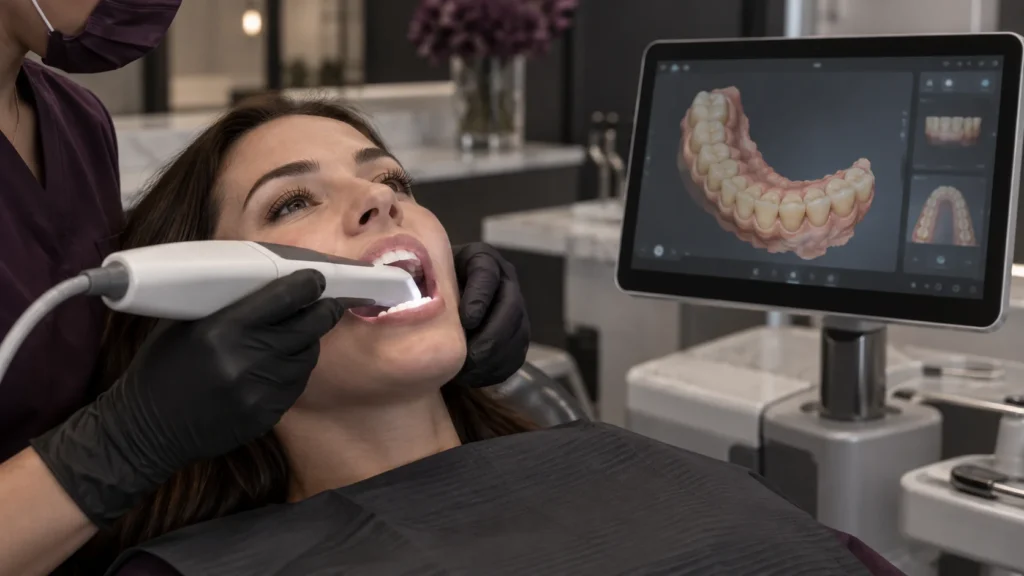
Clear aligner treatment utilizes intraoral scans, photographs, and necessary radiographs; the aligners execute planned tooth movements step by step.
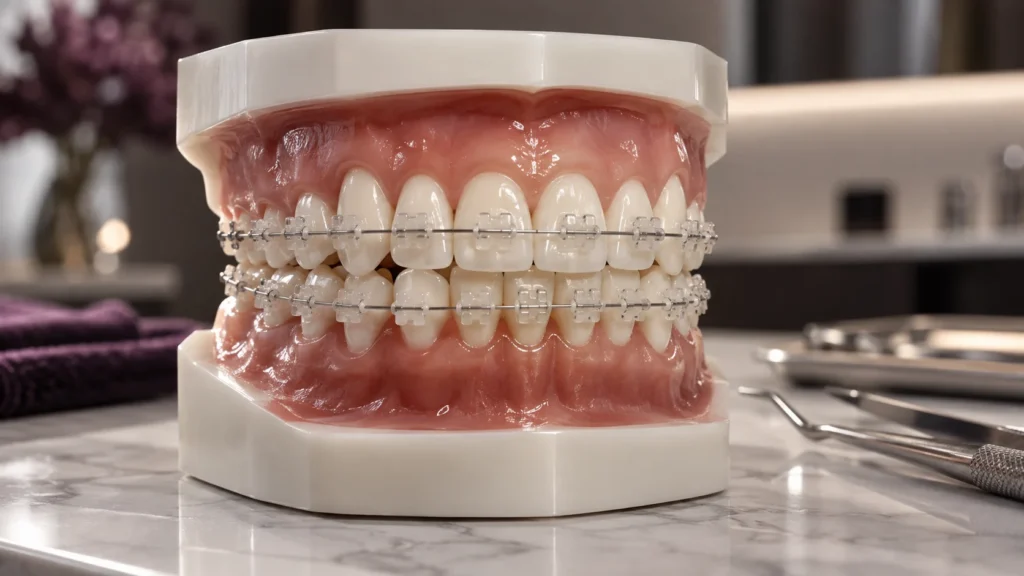
Invisalign is a brand of clear aligner systems[cite: 11]. Small tooth-colored attachments may be bonded to tooth surfaces as needed; brackets and wires are not used[cite: 11]. Aligners are worn for the daily duration recommended by the dentist, except during eating and cleaning, and are typically changed every one or two weeks according to the planned order; change intervals may vary per case[cite: 11]. While plans lasting approximately nine months to two years exist, the total duration depends on the scope of movements, biological response, and usage compliance[cite: 11]. Manufacturing centers and delivery schedules may vary depending on the system used[cite: 11]. Examination and follow-up are conducted at the Ankara Batıkent clinic[cite: 11].
01
DIGITAL EVALUATION
02
CUSTOM PLANNING
EVALUATION
How is suitability determined?
Treatment selection is made by evaluating clinical examination, necessary imaging, and personal expectations together.
01
Orthodontic diagnosis
Crowding, spacing, occlusion, and necessary tooth movements are evaluated.
02
Gums and roots
Periodontal health, bone support, roots, and caries are checked.
03
Usage compliance
Daily wear duration of aligners, removal for cleaning, and check-up routine are discussed.
“Transparent appearance can facilitate treatment; the key factor determining the outcome is accurate planning, regular compliance, and physician follow-up.”
Dr. Ediz Cem Türk
TREATMENT PROCESS
Step-by-step process
01
Digital record
Intraoral scans, photographs, and necessary radiographs are taken.
02
Movement plan
Initial tooth positions and targeted stages are planned digitally.
03
Aligners and attachments
Necessary attachments are applied; usage order of numbered aligners is explained.
04
Monitoring and retention
Movements are monitored, additional aligners prepared if necessary, and retainers used at the end.
FREQUENTLY ASKED
Detailed answers
It is a treatment using removable transparent orthodontic aligners that move teeth in pre-planned small stages.
Clear aligner treatment is an orthodontic approach that moves teeth in a controlled manner using sequential removable aligners. Invisalign is the commercial name for one of these systems. Impressions can be taken with intraoral scanners; photographs and radiographs complete the clinical diagnosis. Brackets and wires are not present, but tooth-colored attachments or elastics may be required. In most cases, aligners are expected to be worn for approximately twenty to twenty-two hours per day. Replacement is mostly planned at one- or two-week intervals; monthly replacement is not valid for every system. Although a schedule ranging between nine months and two years is possible, the exact duration depends on the case and compliance. Treatment requires physician supervision.
It can be evaluated for individuals who have crowding, spacing, or specific bite issues and are capable of complying with aligner wear instructions.
Clear aligner treatment is an orthodontic approach that moves teeth in a controlled manner using sequential removable aligners. Invisalign is the commercial name for one of these systems. Impressions can be taken with intraoral scanners; photographs and radiographs complete the clinical diagnosis. Brackets and wires are not present, but tooth-colored attachments or elastics may be required. In most cases, aligners are expected to be worn for approximately twenty to twenty-two hours per day. Replacement is mostly planned at one- or two-week intervals; monthly replacement is not valid for every system. Although a schedule ranging between nine months and two years is possible, the exact duration depends on the case and compliance. Treatment requires physician supervision.
Intraoral scanning, photographs, radiographs, gums, roots, bone, and bite evaluation are performed.
Clear aligner treatment is an orthodontic approach that moves teeth in a controlled manner using sequential removable aligners. Invisalign is the commercial name for one of these systems. Impressions can be taken with intraoral scanners; photographs and radiographs complete the clinical diagnosis. Brackets and wires are not present, but tooth-colored attachments or elastics may be required. In most cases, aligners are expected to be worn for approximately twenty to twenty-two hours per day. Replacement is mostly planned at one- or two-week intervals; monthly replacement is not valid for every system. Although a schedule ranging between nine months and two years is possible, the exact duration depends on the case and compliance. Treatment requires physician supervision.
A digital plan is prepared, aligners are used sequentially, required attachments are applied, and movements are monitored during check-ups.
Clear aligner treatment is an orthodontic approach that moves teeth in a controlled manner using sequential removable aligners. Invisalign is the commercial name for one of these systems. Impressions can be taken with intraoral scanners; photographs and radiographs complete the clinical diagnosis. Brackets and wires are not present, but tooth-colored attachments or elastics may be required. In most cases, aligners are expected to be worn for approximately twenty to twenty-two hours per day. Replacement is mostly planned at one- or two-week intervals; monthly replacement is not valid for every system. Although a schedule ranging between nine months and two years is possible, the exact duration depends on the case and compliance. Treatment requires physician supervision.
Pressure and sensitivity may occur for a few days upon switching to a new aligner; edges might temporarily irritate soft tissue.
Clear aligner treatment is an orthodontic approach that moves teeth in a controlled manner using sequential removable aligners. Invisalign is the commercial name for one of these systems. Impressions can be taken with intraoral scanners; photographs and radiographs complete the clinical diagnosis. Brackets and wires are not present, but tooth-colored attachments or elastics may be required. In most cases, aligners are expected to be worn for approximately twenty to twenty-two hours per day. Replacement is mostly planned at one- or two-week intervals; monthly replacement is not valid for every system. Although a schedule ranging between nine months and two years is possible, the exact duration depends on the case and compliance. Treatment requires physician supervision.
Total duration is expressed in months in most plans; plans between nine months and two years exist, though exact timing is not guaranteed.
Clear aligner treatment is an orthodontic approach that moves teeth in a controlled manner using sequential removable aligners. Invisalign is the commercial name for one of these systems. Impressions can be taken with intraoral scanners; photographs and radiographs complete the clinical diagnosis. Brackets and wires are not present, but tooth-colored attachments or elastics may be required. In most cases, aligners are expected to be worn for approximately twenty to twenty-two hours per day. Replacement is mostly planned at one- or two-week intervals; monthly replacement is not valid for every system. Although a schedule ranging between nine months and two years is possible, the exact duration depends on the case and compliance. Treatment requires physician supervision.
Not every movement can be performed at predicted levels with aligners; methods may change in cases of severe skeletal issues or poor compliance.
Clear aligner treatment is an orthodontic approach that moves teeth in a controlled manner using sequential removable aligners. Invisalign is the commercial name for one of these systems. Impressions can be taken with intraoral scanners; photographs and radiographs complete the clinical diagnosis. Brackets and wires are not present, but tooth-colored attachments or elastics may be required. In most cases, aligners are expected to be worn for approximately twenty to twenty-two hours per day. Replacement is mostly planned at one- or two-week intervals; monthly replacement is not valid for every system. Although a schedule ranging between nine months and two years is possible, the exact duration depends on the case and compliance. Treatment requires physician supervision.
Attachment detachment, aligner mismatch, caries, periodontal issues, root resorption, or movements progressing differently than planned may occur.
Clear aligner treatment is an orthodontic approach that moves teeth in a controlled manner using sequential removable aligners. Invisalign is the commercial name for one of these systems. Impressions can be taken with intraoral scanners; photographs and radiographs complete the clinical diagnosis. Brackets and wires are not present, but tooth-colored attachments or elastics may be required. In most cases, aligners are expected to be worn for approximately twenty to twenty-two hours per day. Replacement is mostly planned at one- or two-week intervals; monthly replacement is not valid for every system. Although a schedule ranging between nine months and two years is possible, the exact duration depends on the case and compliance. Treatment requires physician supervision.
Aligners should be worn for the recommended duration except when eating, cleaned with lukewarm water, and teeth brushed before reinsertion.
Clear aligner treatment is an orthodontic approach that moves teeth in a controlled manner using sequential removable aligners. Invisalign is the commercial name for one of these systems. Impressions can be taken with intraoral scanners; photographs and radiographs complete the clinical diagnosis. Brackets and wires are not present, but tooth-colored attachments or elastics may be required. In most cases, aligners are expected to be worn for approximately twenty to twenty-two hours per day. Replacement is mostly planned at one- or two-week intervals; monthly replacement is not valid for every system. Although a schedule ranging between nine months and two years is possible, the exact duration depends on the case and compliance. Treatment requires physician supervision.
Fixed brackets, limited restorative modifications, or orthognathic surgery support in skeletal-origin cases can be evaluated.
Clear aligner treatment is an orthodontic approach that moves teeth in a controlled manner using sequential removable aligners. Invisalign is the commercial name for one of these systems. Impressions can be taken with intraoral scanners; photographs and radiographs complete the clinical diagnosis. Brackets and wires are not present, but tooth-colored attachments or elastics may be required. In most cases, aligners are expected to be worn for approximately twenty to twenty-two hours per day. Replacement is mostly planned at one- or two-week intervals; monthly replacement is not valid for every system. Although a schedule ranging between nine months and two years is possible, the exact duration depends on the case and compliance. Treatment requires physician supervision.
EXAMINATION AND PLANNING
Let’s evaluate the right option for you together.
The suitability of Clear Aligner – Invisalign treatment for you can only be determined after clinical evaluation.